

Wool Policy & Initiatives
EU-CAP Network Focus Group 57: 'Innovative and sustainable ways to strengthen the role of farmers in revitalising the European wool value chain'
Background, Objectives and Expert Work
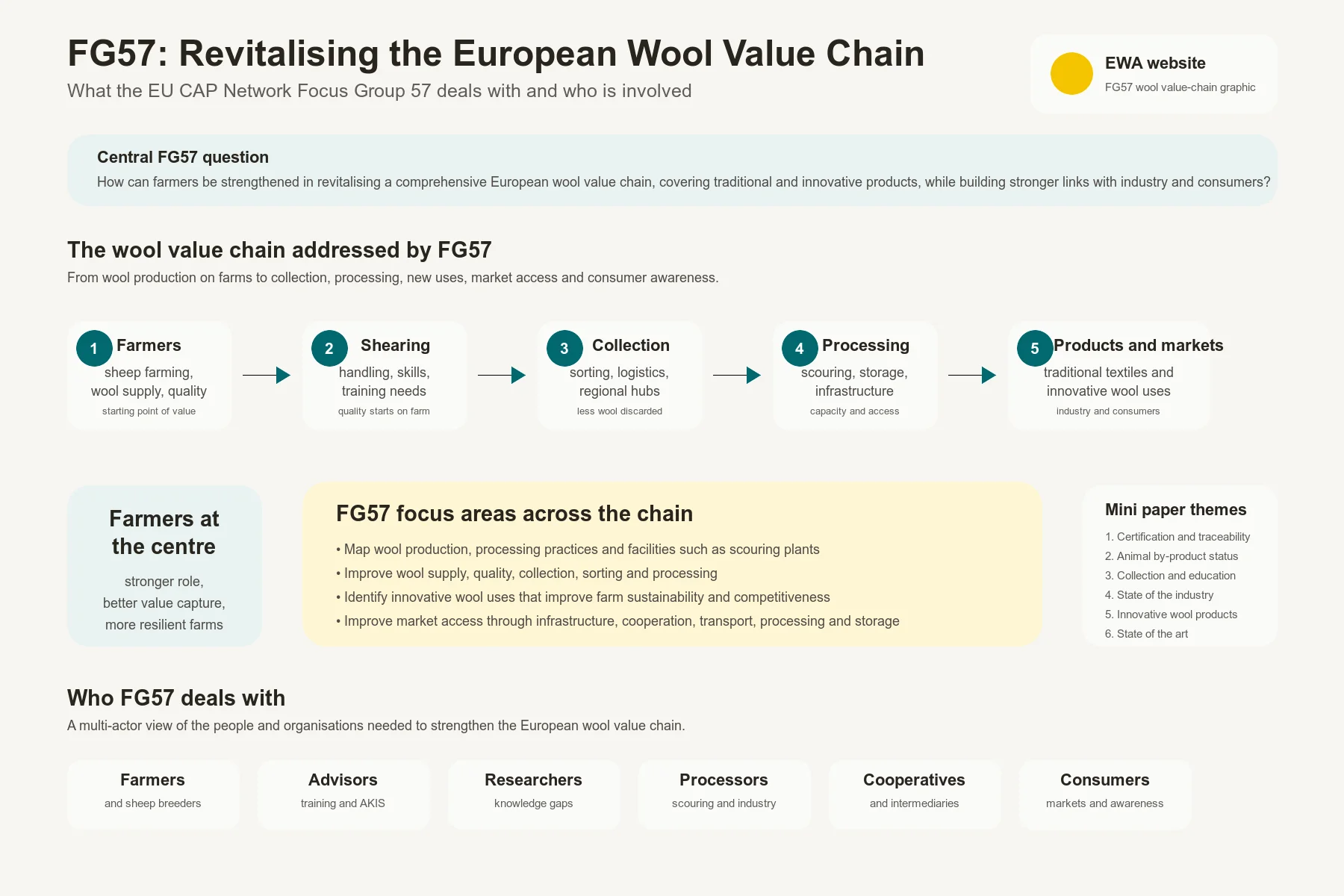
The EU CAP Network Focus Group 57, “Innovative and sustainable ways to strengthen the role of farmers in revitalising the European wool value chain”, focuses on one central question: how can the role of farmers be strengthened in revitalising a comprehensive European wool value chain that includes both traditional and innovative wool products, while establishing stronger links with industry and consumers?
The Focus Group is part of the EU CAP Network Focus Groups on innovation, knowledge exchange and EIP-AGRI. These groups bring together selected experts to exchange knowledge, identify practical solutions and support innovation in agriculture, forestry and rural areas. FG57 is especially relevant for sheep farmers, wool growers, processors, advisors, researchers, cooperatives, rural networks, textile actors and organisations working on circular bioeconomy and sustainable value chains.
A Starting Paper for FG57 has been published by the EU CAP Network to support the Focus Group discussions and final report.
What Are EU CAP Network Focus Groups?
EU CAP Network Focus Groups are temporary groups of selected experts focusing on a specific subject. They create a European forum for sharing knowledge, practical experience and innovative ideas. Each Focus Group takes stock of the state of play, explores practical and innovative solutions to problems or opportunities, and draws on experience from related projects.
Focus Groups are steered by a coordinating expert. Members meet twice and produce a report with the outcomes of their work. They also discuss research results, document good practices and identify implications for further research activities that can help solve practical problems in the sector.
The objectives of Focus Groups include:
taking stock of current practice, including problems and opportunities;
summarising relevant research and possible solutions;
identifying needs from practice and directions for further research;
highlighting priorities for innovative actions;
suggesting potential Operational Groups or other project formats to test and disseminate solutions.
Why FG57 Matters for the European Wool Sector
European wool is a renewable, biodegradable and culturally important material. However, in many regions, wool has lost much of its economic value for farmers. Low prices, fragmented collection systems, limited processing infrastructure, quality variation, regulatory complexity and weak market recognition often mean that wool is treated as a low-value by-product rather than as a valuable agricultural and bio-based resource.
FG57 addresses this challenge by looking at the full wool value chain, from sheep farming and shearing to collection, sorting, scouring, processing, product development, market access and communication. The Focus Group aims to identify how farmers can gain a stronger position in this chain and how European wool can be better connected to traditional uses, innovative products, industry demand and consumer awareness.
Main Tasks of FG57
According to the official FG57 webpage, the Focus Group works on a broad set of practical and strategic tasks.
FG57 maps wool production and processing practices and facilities available at European level, including facilities such as scouring plants, and assesses their needs. This is important because the European wool value chain is highly fragmented, and many regions lack accessible infrastructure for collection, sorting, washing and further processing.
The Focus Group also identifies ways to improve, develop and guarantee the quantitative and qualitative aspects of wool supply. This includes questions of wool quality, consistency, classification, farmer knowledge, shearing preparation and generational renewal. Improving supply is essential if European wool is to become more reliable for processors, manufacturers and innovative end users.
Another task is to improve wool collection, sorting and processing so that the socio-economic and environmental value of the process can increase. Better collection and classification can help reduce discarded wool, improve price recognition and make it easier to connect farmers with processors and markets.
FG57 also explores innovative wool uses that can improve the sustainability and competitiveness of farms. These uses include traditional and textile applications as well as non-textile applications in agriculture, construction, insulation, horticulture, soil health, geotextiles and other bio-based products.
The Focus Group collects and exchanges innovative practices in wool production, processing and use, including new techniques, new technologies and cooperation approaches. It also examines how to improve market access by strengthening infrastructure such as transport, storage and processing, and by supporting cooperation with intermediaries.
Finally, FG57 analyses needs for training, innovation and knowledge transfer, identifies research needs and gaps from practice, and proposes ideas for EIP-AGRI Operational Groups and other innovative projects.
Six Mini Papers Prepared by FG57 Experts
As part of the Focus Group work, experts are preparing six Mini Papers on highly relevant topics for the European wool value chain. These Mini Papers provide practical input for the Focus Group discussions and final report.
Mini Paper 1: A Better Market for European Wool through Certifications, Traceability and Marketing Tools
This Mini Paper focuses on how European wool can gain stronger market recognition through certification schemes, traceability systems and marketing tools. It examines how labels, voluntary schemes, digital tools and storytelling can help communicate wool origin, quality, sustainability and producer value.
A key point is that certification and traceability are not only technical tools. They can also strengthen farmers’ bargaining power, support differentiated markets, improve price recognition and contribute to fairer remuneration. The paper also looks at how European wool could be better communicated to consumers through provenance, regional identity and credible market narratives.
Mini Paper 2: Wool as an Animal By-Product: Challenges and Opportunities
This Mini Paper examines the regulatory status of wool as an animal by-product and the practical consequences for farmers, processors and public authorities. It highlights that wool’s legal and administrative treatment can influence whether it is seen as a resource, a by-product or a burden.
The paper also explores the opportunities offered by the direct use of raw wool in agriculture. Examples include compost, mulch, pellets, peat substitution, soil amendment and erosion control. These uses may offer low-cost, scalable and environmentally relevant solutions that improve soil regeneration, water retention and climate resilience while reducing waste and avoiding synthetic materials.
Mini Paper 3: Wool Improvement Initiative: Collection, Cooperation and Education
This Mini Paper focuses on improving the quality, consistency and value of European wool through better practices in production, handling, collection, classification and training. It highlights the role of breeding, animal husbandry, preparation for shearing, fleece management, wool sorting and coordinated collection systems.
The paper identifies several practical needs, including standardised quality classification, stronger training for shearers and wool handlers, better logistics, regional wool hubs, farmer education, demonstration farms and digital wool traceability tools. Its central message is that better coordination and education can help reduce waste, raise wool quality and create stronger economic opportunities for farmers and processors.
Mini Paper 4: The State of the European Wool Industry: History, Current Situation and Future Foundations
This Mini Paper provides a broad overview of the European wool industry, including its historical development, current situation and future foundations. It describes the diversity of European sheep breeds and wool types, the decline of processing infrastructure, the role of scouring plants and factories, and the complexity of the wool value chain.
The paper also presents different types of initiatives that can strengthen farmer involvement, including individual farmer initiatives, farmers’ associations, processor-farmer partnerships, cooperatives, government-led programmes, funding tools and European networks. It helps situate FG57 within the wider historical and structural transformation of the European wool sector.
Mini Paper 5: Innovative Uses of Wool to Support Extensive Sheep Farmers in the EU
This Mini Paper focuses on innovative uses of wool, with a particular emphasis on supporting extensive sheep farmers. It looks beyond traditional textile uses and explores how wool can be valorised in non-textile applications.
Examples include building insulation, soundproofing, horticultural substrates, soil amendments, geotextiles and composite materials. The paper links these applications to the circular bioeconomy, fossil-free materials and the need to create new demand for wool. Its farmer-oriented perspective is especially important for low-intensity and pasture-based sheep systems, where wool often has low market value but could contribute to additional income streams and environmental benefits.
Mini Paper 6: State of the Art of the Wool Value Chain in Europe
This Mini Paper provides a state-of-the-art analysis of the European wool value chain. It describes the chain from sheep breeding and shearing to collection, sorting, scouring, processing, manufacturing and retail.
The paper identifies key structural issues affecting farmers, including weak price transmission, fragmented collection systems, infrastructure decline, limited processing capacity, regulatory complexity, lack of harmonised standards, and limited data transparency. It also looks at emerging operational models, including farm-level integration, cooperative aggregation, local value-chain initiatives and CAP-oriented solutions such as Operational Groups. Its main message is that revitalising European wool depends not only on recognising wool’s value, but also on rebuilding coordinated value-chain structures that allow farmers to participate in value creation.
FG57 Meetings and Timeline
The first FG57 meeting took place in Stockholm, Sweden, on 27 to 28 November 2025. During this meeting, the experts discussed the Focus Group’s central question, tasks and first findings.
The second meeting took place in Aranjuez, Spain, on 6 to 7 May 2026. This meeting continued the expert exchange and further developed the Focus Group’s work towards its final outcomes.
FG57 is expected to present its results and recommendations by September 2026, according to the EU CAP Network call announcement.
Relevant Links
Suggested Call-to-Action Buttons
Final Results and Publications
2. Focus Group 57: Final Results and Publications
The work of EU CAP Network Focus Group 57 (FG57) has been completed. The Final Report, its annexes and all six Mini Papers have now been officially published by the EU CAP Network, marking an important milestone for European wool.
Together, these publications provide a substantial body of knowledge, analysis, practical experience and recommendations addressing the challenges and opportunities facing European wool and its value chains.
The Final Report
The FG57 Final Report brings together the principal findings and recommendations developed through the Focus Group process.
It considers the European wool value chain from sheep farming and wool production through collection, sorting, grading and processing to product development, markets and innovation. It addresses both traditional uses of wool and opportunities for innovative textile and non-textile applications.
The report identifies areas where stronger cooperation, knowledge exchange, infrastructure, training, research, innovation and appropriate policy support could contribute to stronger European wool value chains and improve the position of farmers within them.
Importantly, the report reflects the diversity of European wool. Farming systems, sheep breeds, wool characteristics, infrastructure, markets and regional conditions vary considerably across Europe. There is therefore no single European wool sector and no single solution. The recommendations provide a basis from which different regions and actors can develop approaches appropriate to their own circumstances.
Six Mini Papers
Alongside the Final Report, the FG57 experts developed six Mini Papers, allowing specific areas to be explored in greater depth:
Mini Paper 1 – A Better Market for European Wool through Certifications, Traceability and Marketing Tools
Explores certification, traceability, provenance and market communication and their potential to strengthen recognition and value for European wool.
Mini Paper 2 – Wool as an Animal By-Product: Challenges and Opportunities
Examines the regulatory framework affecting wool and opportunities for practical and innovative uses.
Mini Paper 3 – Wool Improvement Initiative: Collection, Cooperation and Education
Addresses wool quality, handling, collection, classification, training, education and cooperation throughout the value chain.
Mini Paper 4 – The State of the European Wool Industry: History, Current Situation and Future Foundations
Provides a broader perspective on the development, current structure and future needs of the European wool sector.
Mini Paper 5 – Innovative Uses of Wool to Support Extensive Sheep Farmers in the EU
Explores opportunities for innovative textile and non-textile applications and their potential for farmers and regional value chains.
Mini Paper 6 – State of the Art of the Wool Value Chain in Europe
Examines the structure of the European wool value chain, existing challenges and emerging approaches for developing stronger and better-connected value chains.
Strong EWA Involvement in FG57
The European Wool Association is proud that six EWA members were among the 20 experts selected by the EU CAP Network to participate in FG57.
Nathalie Ketterle, EWA Board Member and Directrice générale, served as Coordinating Expert for FG57. Her responsibilities included coordinating the work of the Focus Group, organising and moderating meetings and expert discussions, coordinating contributions and the development of the Mini Papers, bringing together the different perspectives of the experts, synthesising findings and recommendations, and drafting and finalising the Final Report.
EWA Board members Prof. Georgios Arsenos, Satu Kumpulainen and Betty Stikkers also participated as selected FG57 experts, together with EWA members Dr. Bogdan Cekić and Julie Loi.
Their contributions formed part of the wider collective work of all 20 experts, bringing together knowledge and practical experience from different countries, disciplines and parts of the European wool value chain.
An Important Milestone – Not the End of the Work
Publication marks the completion of the formal FG57 process, but the challenges and opportunities identified by the experts require continued attention.
For EWA, the results are particularly relevant because they connect closely with the association's work to strengthen European wool value chains, recognise wool as a valuable natural resource, support farmers and regional initiatives, improve knowledge and cooperation, maintain skills and infrastructure, and connect actors throughout Europe.
The Final Report and Mini Papers should therefore also be seen as a starting point for further discussion, cooperation and practical action.
EWA will continue to contribute to this process and to involve its members and the wider European wool community in discussing how the findings and recommendations can be developed and translated into action.
Further activities and developments arising from the FG57 results will be reported in Section 3: From Recommendations to Action.
Publications and Further Information
Final Report and annexes
https://eu-cap-network.ec.europa.eu/publications/eu-cap-network-focus-group-innovative-and-sustainable-ways-strengthen-role
FG57 Focus Group page and all six Mini Papers
https://eu-cap-network.ec.europa.eu/focus-groups-innovation-knowledge-exchange-and-eip-agri/focus-group-innovative-and-sustainable-ways-strengthen-role-farmers-revitalising-european-wool
From Recommendations to Action
coming soon
EU Bioeconomy Strategy
The EU’s Strategy for a Competitive and Sustainable Bioeconomy is shifting Europe away from fossil‑based materials towards renewable, circular and regenerative bio‑based systems. It explicitly identifies bio‑based textiles and natural fibres as key markets for sustainable biomaterials, which is a game‑changer for European wool and for rural regions that depend on sheep farming.
The strategy aims to accelerate the use of biological resources in sectors such as agriculture, textiles, construction and chemicals, while respecting ecological limits and delivering climate, biodiversity and socio‑economic benefits. It builds on the earlier 2012 and 2018 bioeconomy strategies, but goes further by focusing on industrial deployment, investment and the creation of lead markets for bio‑based materials and technologies.
For the wool sector, this new framework is particularly significant because EU analyses on bio‑based textiles explicitly mention natural fibres such as flax, hemp and wool as strategic, locally producible fibre resources for a sustainable and circular textile bioeconomy. This formal recognition supports the message that European sheep wool is not a marginal by‑product, but a relevant bio‑based material in its own right, with strong potential to contribute to climate goals, circularity and rural development.
The strategy promotes the use of agricultural residues, by‑products and organic waste to create higher‑value bio‑based products and materials. In this context, underused or low‑value wool streams can be transformed into innovative applications – from building insulation and packaging to soil‑improvement products and forestry solutions – turning what is often treated as waste into a valuable co‑product for farmers and rural SMEs.
The Bioeconomy Strategy is accompanied by a wider regulatory and policy toolbox – including measures on sustainable biomass supply, circular product design, environmental performance and industrial innovation – which together create the enabling conditions for bio‑based materials. For the European Wool Association and its members, engaging in this evolving bioeconomy agenda is therefore crucial to ensure that sheep wool is fully recognised and widely used as a strategic bio‑based resource in Europe.
For more information, see the European Commission’s page on the EU Bioeconomy Strategy:
https://environment.ec.europa.eu/strategy/bioeconomy-strategy_en.
Generational Renewal in Agriculture
Ensuring the right conditions for young farmers and rural youth to enter, remain in and develop their activities in agriculture has become a central priority within the Common Agricultural Policy and wider EU rural development strategies. Generational renewal is particularly relevant for the wool sector, where the continuity of sheep and other wool‑producing livestock farming directly underpins the availability of European wool and the vitality of rural territories.
The European Wool Association (EWA) was invited to actively participate in the EU CAP Network seminar “Ensuring the right to stay for young farmers and rural youth in rural areas”, held in Brussels. At this seminar, EWA contributed the perspective of wool producers and regional wool initiatives, highlighting how generational renewal interacts with grazing systems, landscape management, biodiversity, animal welfare and the emerging circular bioeconomy for wool.
Through its participation, EWA engaged in discussions on practical and policy solutions to improve access to land, fair remuneration, advisory services and innovation support for young farmers. The association helped to underline the importance of recognising wool as a strategic, place‑based bioresource that can motivate younger generations to take over farms, diversify activities and create new rural business models.
Building on the outcomes of the seminar, EWA continues to work with European partners to:
Promote policy frameworks that keep wool‑producing farms economically viable and attractive for young people.
Support knowledge exchange and networking between young farmers, wool initiatives and downstream market actors.
Integrate the specific needs of the wool sector into broader agricultural, climate and rural development debates.
For more information on the seminar “Ensuring the right to stay for young farmers and rural youth in rural areas”, see the event page of the EU CAP Network: https://eu-cap-network.ec.europa.eu/publications/eu-cap-network-seminar-ensuring-right-stay-young-farmers-and-rural-youth_en.
In addition, the topic of generational renewal is anchored in the EU’s broader strategy to support young farmers and rural youth within the Common Agricultural Policy. For an overview of the EU approach and key measures on generational renewal, please refer to the European Commission’s information on “Generational renewal in agriculture and rural areas”:
EWA Position Papers
Ihr Text
International Year of Rangelands & Pastoralists 2026
Inspirational Examples
Innovative Uses of Wool
Your participation is requested here. Anyone who has developed an innovation made of sheep wool or who knows of an innovation made of sheep wool can send it to us in a report with pictures to be published on this website.
Contact:
Sustainable Rope Ltd.
Sustainable Rope Ltd.
https://sustainablerope.com/
Kate Drury, Founder of Sustainable Rope Ltd.
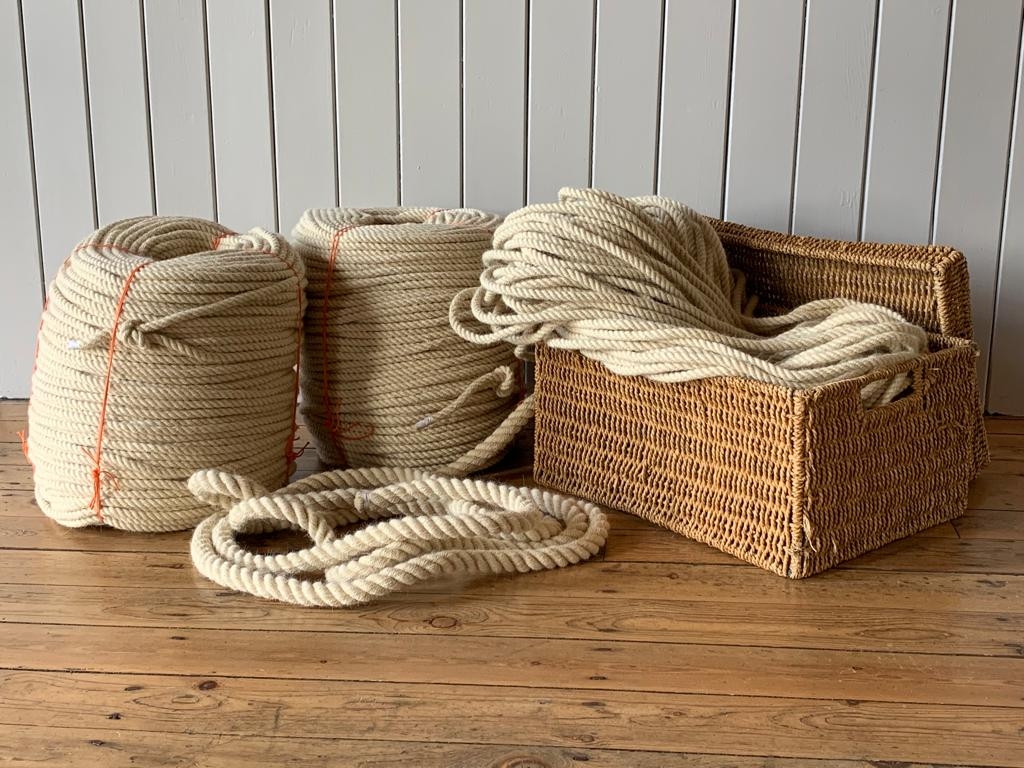
From Farm to Functionality – Sustainable Rope offers an entire rope manufacturing process that takes place within 60 miles of their workshop in West Yorkshire
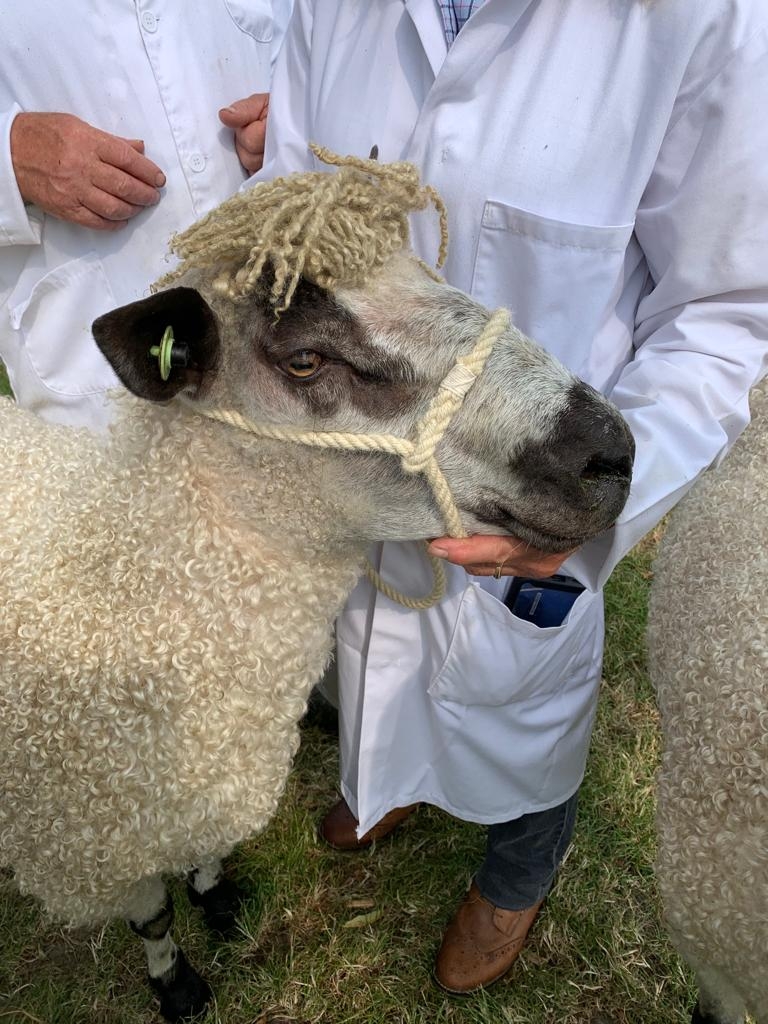
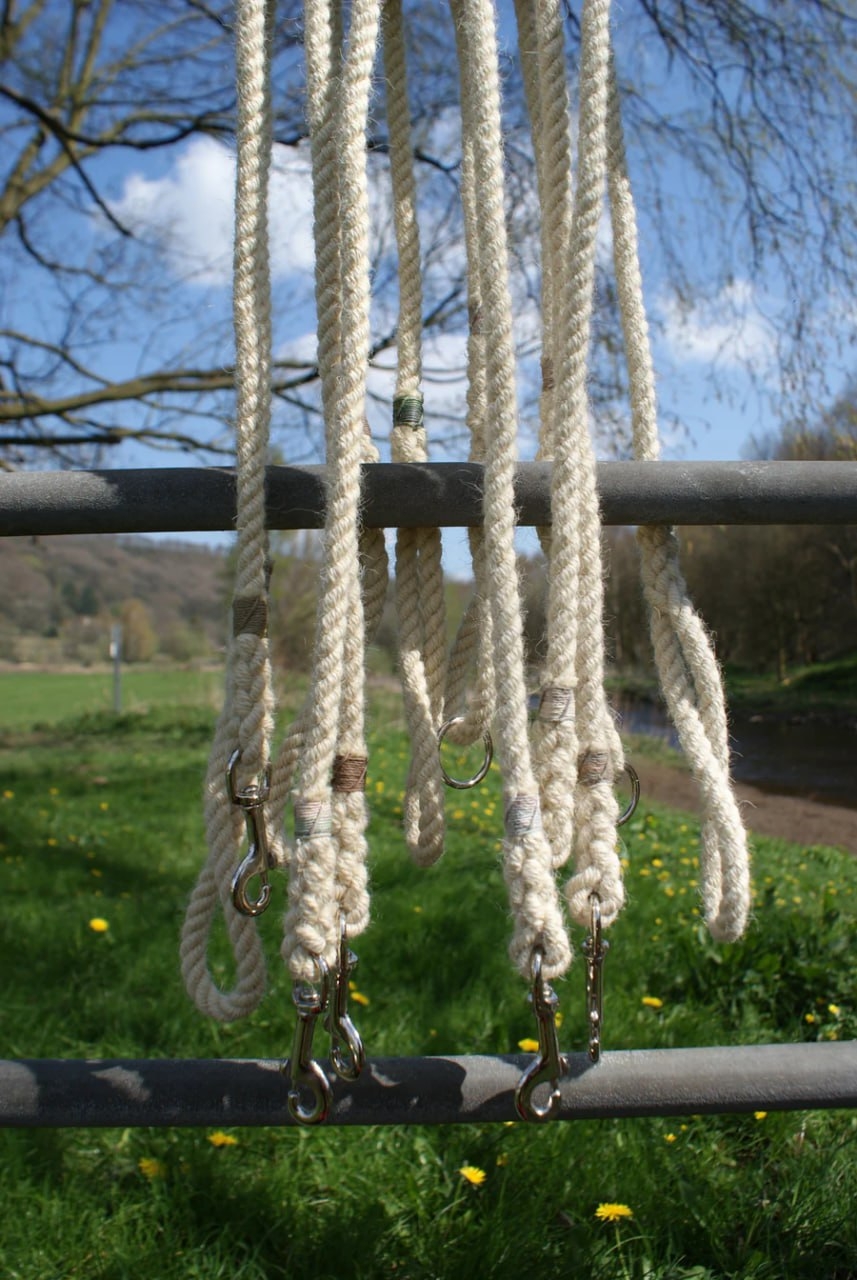
Supporting local producers and craftspeople, the rope is made from 100% wool, no plastic, and it is biodegradable, renewable and sustainable with natural antibacterial properties.
The rope is manufactured in a range of diameters, from small lengths to full coils, all traceable to wool off British farms. Wool offers durability and flexibility, and the variety of uses for wool means very little is wasted.
Sustainable Rope is being used for growing seaweed as a replacement to plastic rope. Seaweed farming has so many positive sustainable uses, from fertiliser to foodstuff. It negates carbon and nitrogen and provides an ecosystem, and the rope can help that happen sustainably.
Wool Pots
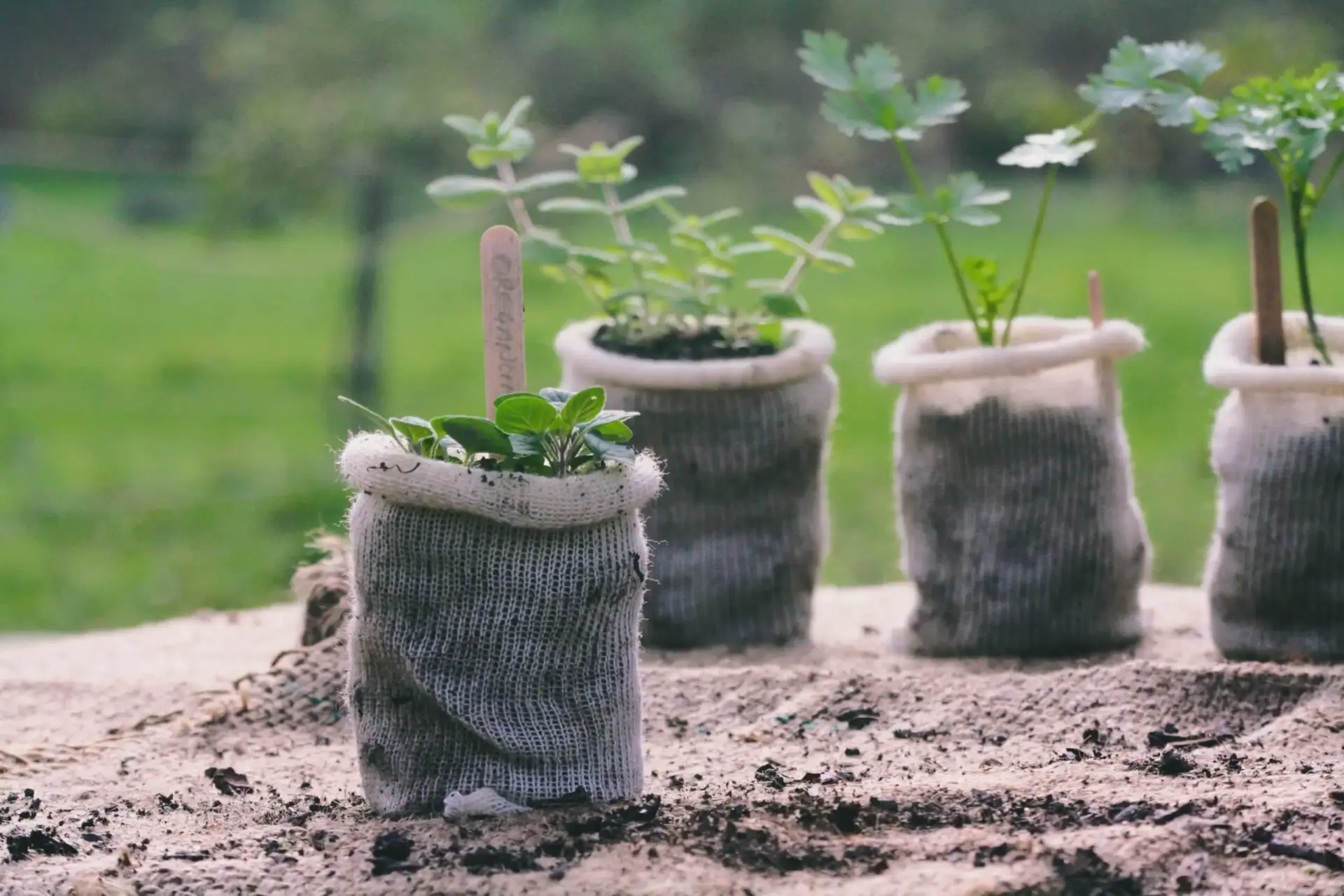
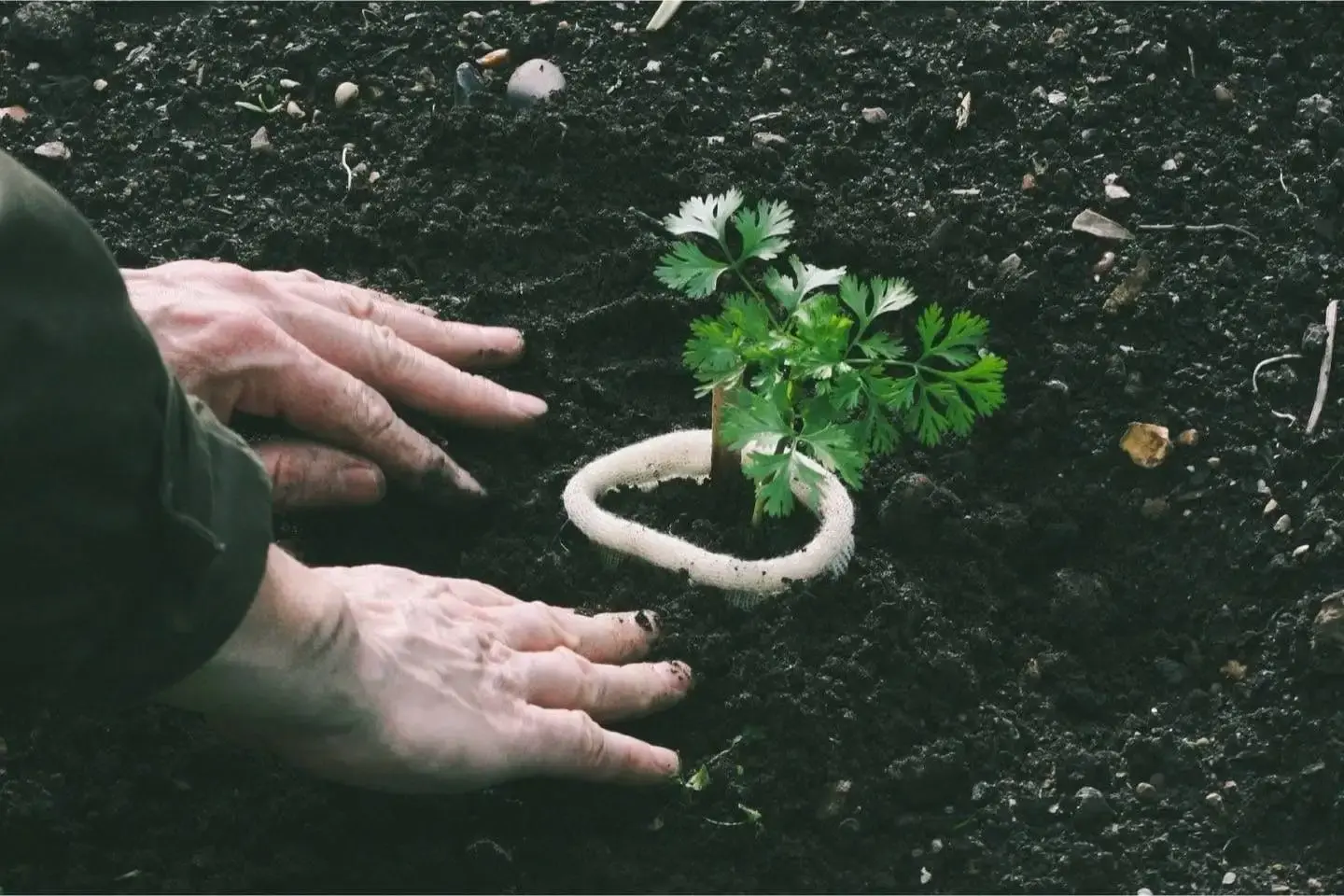
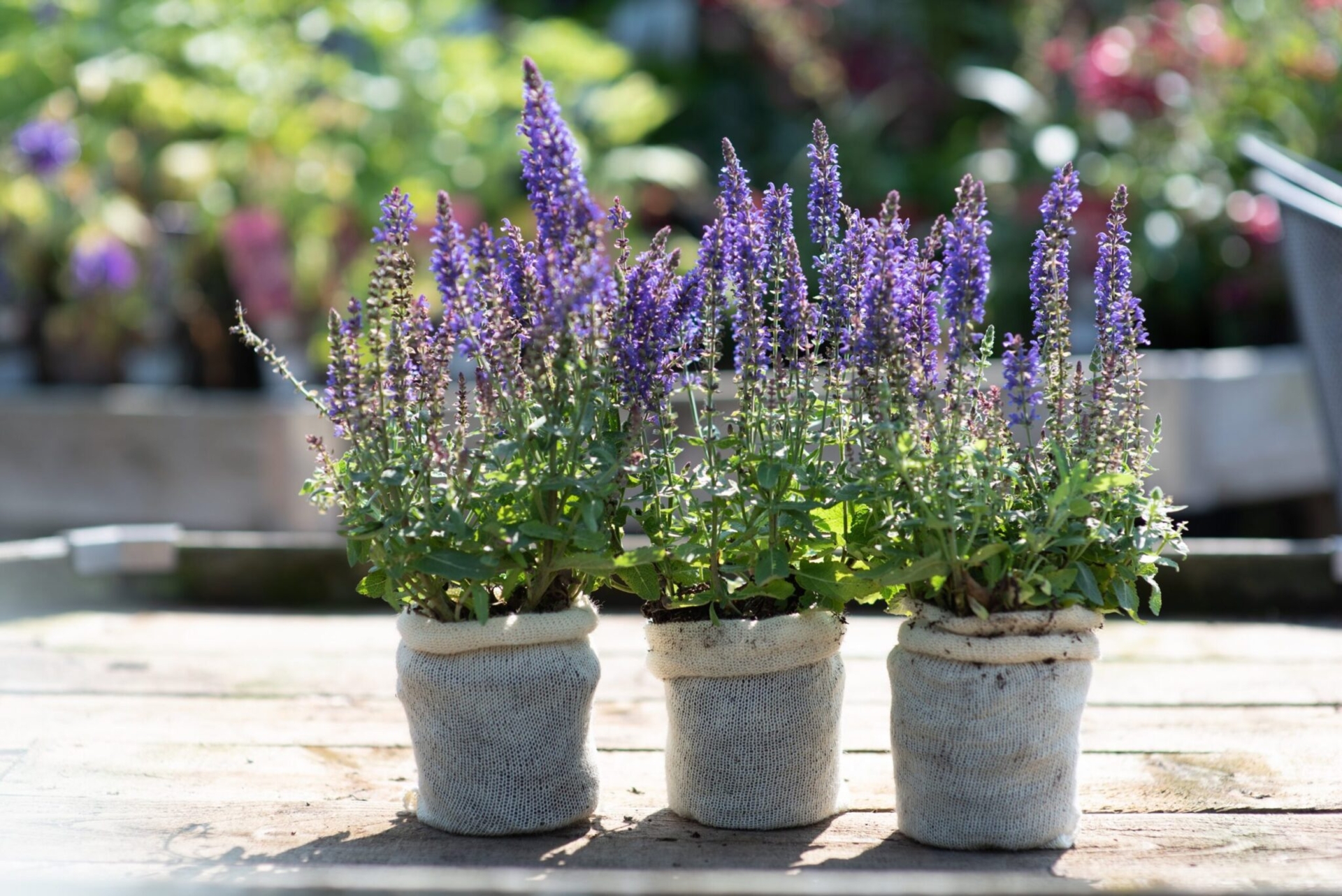
Wool Pots offer a biodegradable, environmentally friendly and sustainable alternative to plastic plant pots. Wool Pots want to help reduce the amount of single use plastic in horticulture, and their product will help make the world and gardens a better place and as an additional advantage they make it easier to grow plants.
Why Wool?
It’s endlessly versatile, totally sustainable, environmentally friendly and biodegradable, it also…
makes great plant pots
is a natural slug and snail deterrent
it acts as a water condenser channelling moisture downwards to the plant’s roots
it’s strong and long lasting
it eventually decomposes into a bio-rich plant food.
Wool Pots are Helping the Environment
in the UK up to half a billion plastic plant pots are sent to landfill every year because they can’t be recycled
black plastic pots containing carbon inks can take up to 450 years to decompose
the cost of plastic plant pots is so much more than the retail price, the legacy they leave behind is damaging for future generations
Wool Pots
Graham Hull and Tom Lind, the Directors of Wool Pots
Historical Insights
Storytelling
Your participation is requested here. Anyone who has a storytelling experience related to sheep wool or who knows of a storytelling initiative involving sheep wool can send it to us in a report with pictures to be published on this website.
Contact:
Exploring the Historical Context and Idiomatic Expressions Related to Sheep and Wool: Unveiling the Rich Cultural Significance and Soliciting Contributions Initiated by G. Thomas
Wool has been one of humanity's earliest and most fundamental textile materials, dating back thousands of years. Its significance lies not only in its practical applications but also in its economic, cultural, and social implications.
In ancient times, wool production was a vital aspect of agrarian societies, providing clothing, bedding, and other essentials. Sheep were domesticated primarily for their wool, which served as a crucial resource for survival. The ability to produce wool enabled human communities to thrive in diverse climates and environments.
Throughout history, wool has been a symbol of wealth, status, and prestige. In many cultures, the quality and quantity of one's wool holdings were indicators of social standing and prosperity. The wool trade played a central role in the economy of numerous civilizations, driving commerce and international trade routes.
During the Middle Ages and Renaissance, the wool industry experienced a period of remarkable growth and development in Europe. Guilds and associations were formed to regulate wool production, ensuring quality standards and fair trade practices. Cities such as Florence, Bruges, and London became renowned centres of wool manufacturing and trade, contributing to the wealth and prosperity of their respective regions.
The importance of wool extended beyond economic considerations to encompass cultural and social aspects as well. Wool production and textile craftsmanship were valued skills passed down through generations, shaping traditions and cultural identities. Many customs, rituals, and folk traditions revolved around the processing, spinning, and weaving of wool, reflecting its integral role in everyday life.
Ever been 'on tenter hooks', 'had the wool pulled over your eyes' or 'got down to brass tacks'? We’re still using many expressions connected to sheep, wool, and textiles in our everyday speech, even if we don’t always realize it. Textiles were such an important part of the economy, it’s not surprising that countless sayings relate to the woollen industry.
Spindles were used for spinning wool, usually with a small round weight or stone fixed to the bottom. This was called a “whorl” and made the yarn tension more constant but sometimes took a while to get right. Nowadays we use the expression 'give it a whirl/whorl' to mean 'have a go'.
Spinning was traditionally done by women. Someone who was bad at spinning wasn’t expected to make a good wife, leading to the term 'spinster', meaning an unmarried woman whose only task was to spin.
After cloth was washed it was stretched out on frames and left to dry. It was held in place 'on tenter hooks' to prevent it losing its shape or flying away.
Factory or machine-made clothes or textiles were seen as less special, more ordinary than handmade clothes. These clothes were the 'run of the mill'.
We often describe someone as 'dyed in the wool', meaning someone whose views won't change. This saying originally came from when raw wool was dyed before it was processed or combed, and it was said to hold its color longer.
'Getting down to brass tacks' means focusing on the detail. It relates to fabric being measured between two brass tacks set into the cutting counter.
When wool was spun onto a reel or “weasel”, it made a sound when a certain length of yarn was reached – as in 'pop goes the weasel' in the nursery rhyme.
White wool can be dyed many colors but wool from black sheep can only be spun into black wool, so you don’t want too many black sheep in your flock, hence the expression 'black sheep of the family'.
Judges were said to have the 'wool pulled over their eyes'. This apparently came from judges wearing wool wigs that slipped over their eyes so they became blind to the facts of the case. (Facebook, Yorkshire Treasures)
Scientific publications